.png?width=765&height=430&name=Blog%20header%20templates%20(37).png)
Service of process is essential to initiating a matter, so there’s a lot of pressure on filers to get it right. Delays, lack of documentation, or defective service can all compromise the timeline and outcome of a case.
To ensure process is served effectively, filers in Texas need to understand how service of process works, remain aware of Texas state rules that impact how process can be served in your jurisdiction and for your case type, and implement best practices to reduce the likelihood of delays, errors, or other complications that could prevent successful service of process and comprise your case.
How does service of process work in Texas?
When initiating a case, service of process in Texas works in much the same way it does in other states:
Step 1: File the petition
Typically, when filing the initial petition initiating a matter, the filer requests the issuance of citation. Citation requests are typically submitted simultaneously with the petition, while others allow them to be requested later.
Step 2: Obtain the citation
Depending on the county, the citation will either be emailed, posted to the county's website for you to download, or mailed.
Step 3: Serve the citation
Once the filer has the necessary citation, they request or place an order for service of process according to state rules that govern how process can be served for each case type. When multiple types of service are allowed, the filer can choose a preferred method based on factors like price, speed, and likelihood of success in reaching the recipient. If typical methods of service are unsuccessful, local court rules may vary in attempts required before alternative service is allowed. Once local rules have been met, alternate forms of service may include substitute service or service by posting.
Step 4: File return of service
When service of process is completed, the filer should receive proof of successful service. This return of service must be filed with the court to demonstrate that parties have been notified so the case can move forward.
Texas service of process rules
Service of process is always governed by state, local and jurisdictional rules that impact how process must be served, and Texas does have some unique rules that filers within the state should be aware of.
- Mandatory eFiling: In Texas, eFiling is mandatory across mandatory in district, county, and appellate courts. To initiate the matter, you will need to eFile your petition and request for citation through the state portal, eFileTexas, using the state-certified EFSP of your choice.
- Initiating a case: Even though the portal allows for eService in ongoing cases, you must use formal service methods when initiating a case and serving process to named parties. eService is only used for serving documents to parties already attached to an existing matter.
- Who can serve: In Texas, process can be served by a county sheriff, deputy sheriff, constable, or deputy constable, or a certified process server. In some cases, documents can be served by another person authorized by court order or by certified mail.
- Court approval for alternative service: Approval for alternative service requires a detailed affidavit showing failed attempts, a specific court order describing method, and strict compliance with the order. While this is a standard process, Texas courts tend to scrutinize the paperwork more closely than courts in other states. As of 2020, Texas courts can now expressly authorize service by email, social media, or other technology in line with Rule 106 (b)(2). Service by these electronic service options must still meet the same standards as other forms of service.
- Rule 106 substituted service: Substituted service may be referred to as “Rule 106 service” because Rule 106(b) of the Texas Rule of Civil Procedure states that a judge may authorize a different method of service if the plaintiff shows that personal service or service by certified mail was attempted but unsuccessful and that the proposed alternative method is a reasonable alternative for giving the recipient notice.
- Return of service: Under this rule, proof or return of service must include the following to be valid:
- Case style and number
- Date and time the server received the papers
- The server’s certification number and its expiration date (if service is performed by a certified server)
- Person served (or description if substituted service)
- Date, time, and place of service
- Method of service
- Identity and signature of the process server
A return signed by anyone other than a sheriff, constable, or court clerk must be sworn or signed under penalty of perjury. Filers seeking a default judgment must have return of service on file with the court for ten days before a default can be granted.
Service of Process vs. eService
Texas' state eFiling portal, eFileTexas, allows filers to order eService when they submit a filing, but it’s important to understand the difference between eService and traditional service of process.
|
Service of Process |
eService |
|
Starts a case |
Used during a case |
|
Establishes jurisdiction |
Delivers ongoing filings |
|
Requires formal service methods |
Electronic delivery through eFiling |
What happens if service of process is defective?
If service does not comply with the Texas Rules of Civil Procedure, it is considered defective and can cause delays in your case. When service is defective, the defendant’s response deadline will not start, extending the case schedule.
If a default judgment has been obtained in a case where service is later found to be defective, the return of service can be overturned. The filer will need to re-serve the recipient correctly in order to pursue the case. If the service is not corrected, the court may dismiss the case entirely.
Service may be considered defective if:
-
- The wrong person was served
- The citation contains errors
- Required documents were not included
- Service was completed by an unauthorized person
- The return or return of service is incomplete or inaccurate (in some instances, like default judgments)
- The plaintiff failed to follow the specific method authorized by the court
Texas service of process best practices
Considering that your entire case hinges on accurate service of process, it’s critically important to adhere to best practices when ordering service of process to avoid common service of process mistakes.
- Ensure an accurate citation has been issued
In Texas, service of process hinges on a properly issued citation, so you should always verify the citation is issued before service is attempted and confirm that the case number, party names and court information match. A correct petition served with an incorrect citation can jeopardize default return of service later. - Confirm addresses early
Most service delays are caused by incorrect addresses, not issues with the server. Cross-check the addresses you have with Secretary of State records, registered agent information, or previous filings and discovery responses to ensure you have the right information so you can avoid delays. - Document attempts before pursuing substituted service
Texas courts expect a documented pattern of failed attempts before granting substituted service under Rule 106. You should attempt service multiple times on different days of the week, including both weekend and weekday attempts, and at different times of day and document each attempt thoroughly before requesting permission for substituted service. Judges often deny substituted service if effort isn’t well documented, and quality of documentation can matter more than number of attempts in demonstrating effort, since there is no set minimum in the rule. - Over-document the return of service
Texas courts are strict about returns of service. Review returns immediately upon receipt and make sure they include exact time and date, location, method of service as well as the server and the name of the person served. - Be strategic when choosing a server
Service by sheriff or constable can be a cost-effective option. Private servers are often the best choice when you’re on a short timeline and speed of service is important, or when you expect the recipient to be difficult to serve or require multiple attempts for a successful service. - Make sure you understand the default answer deadline structure
Under the Texas Rule of Civil Procedure 99, defendants must respond by 10:00 a.m. the next Monday morning after their 20-day period expires. The clock starts at the moment of confirmed service, so keep this in mind when planning service of process within your case timeline.
How to reduce risk when ordering service of process in Texas
- Choose the correct service method
Local jurisdiction rules may dictate what type of process is required for your case. Make sure to double check all applicable rules to avoid a delay due to incorrect service.
- Monitor service status
Know as soon as possible if there is a service issue or if you need to pursue alternate or substitute service so you don’t lose more time.
- Maintain accurate records
To pursue other forms of service, you’ll need to prove that you tried the required way first and were unsuccessful. Having documentation at the ready will make those requests that much easier.
- Understand the difference between service of process and eService
These can be easily confused in Texas because of the provision to select eService when submitting an eFiling. Make sure you’re not planning to use eService to serve someone who has not yet been involved in the matter. - Use technology and standardized workflows to reduce risk
What’s unique about the statewide texas court portal is that you’re required to choose an electronic filing service provider (EFSP) to act as your interface with eFileTexas. This gives filers and opportunity to choose an EFSP that offers additional features that make filing easier. For example, InfoTrack offers form auto-filling and local rules validation to reduce the risk of filing errors.
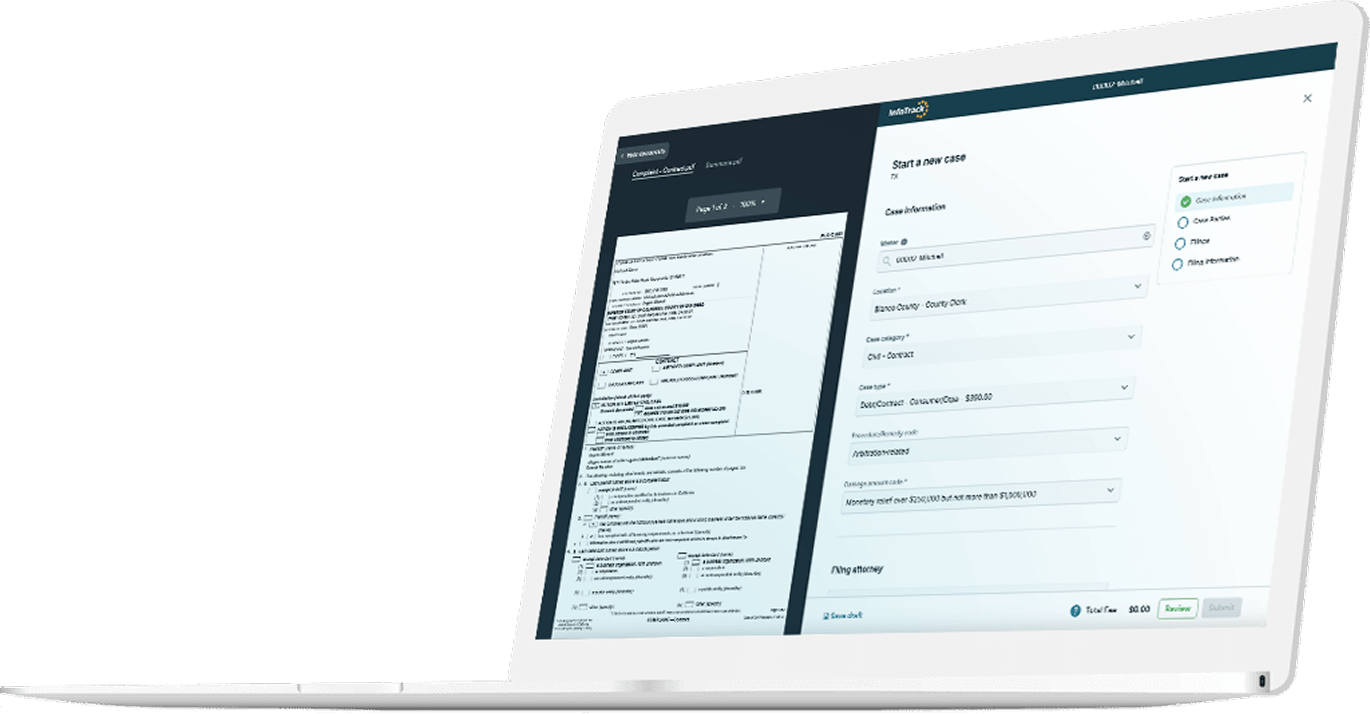
InfoTrack also makes service of process easier by allowing you to order service without leaving your case management system. With InfoTrack, you can also track the status of service, receive updates, and reduce errors throughout the case initiation process while providing an audit trail and improving communication about case essentials. InfoTrack’s process serving solution is the most efficient way to file, serve, and post service verification to state courts in the U.S. within a single tool.
Sign up for an InfoTrack account today to see how see how the right tech can help your team serve court documents more efficiently.

People also ask
Can I eServe a lawsuit in Texas?
When initiating a lawsuit, filers must use formal service of process unless the court has authorized serving the initial lawsuit itself by email, social media, or other technology after standard methods have been tried and failed. Parties already named in a case can be served by eService.
How long does service of process take in Texas?
This depends on the method of service you’re using, the recipient's location, and how easy or difficult they are to find. Professional service of process can take anywhere from a few days to two weeks, and the overall timeline can take longer if you’re required to use an alternate method to effectuate service successfully.
Can someone refuse service in Texas?
A recipient may physically refuse documents, but that doesn’t mean they can refuse involvement in the matter. Texas courts may consider service effective even if the defendant refuses to accept the documents or walks away after being informed of service. If the recipient avoids service by refusing delivery of certified mail or otherwise dodging the process server, you can pursue alternative or substituted service to successfully initiate the matter.
What happens if service cannot be completed?
If a recipient cannot be contacted via alternative or substituted service, you may be able to pursue service by publication or another court-authorized alternative. These methods are a last-resort option and generally subject to stricter requirements because they provide less certainty that the defendant will actually receive notice.
Can a defendant be served electronically?
If permitted by the court when formal methods of service have been unsuccessful, or when using eService to notify parties of subsequent filings in existing cases.