.png?width=765&height=430&name=Blog%20header%20templates%20(15).png)
Traditional law firm billing models are far from perfect, and as technology evolves, they could become even more incompatible with the modern law firm.
“The billable hour model—when the hour is the measure—is on a collision course with AI,” said Gwen Griggs, Esq., co-founder of ADVOS Legal, on a recent webinar hosted by InfoTrack. Grigg’s law practice pioneered a points-based membership billing model and she now advocates for more firms to adopt alternative billing models better suited to teams using advanced technology to speed up their work.
According to a 2024 survey by Best Law Firms, 72% of law firms in the U.S. are currently offering alternative fee agreements (AFAs). They’re most common among large law firms, up to 96% of which offer AFAs, but that doesn’t mean new ways of billing are out of reach for smaller firms—70% of solo practitioners are offering at least one form of AFA as well.
Law firms looking to update their billing practices, or new firms that want to try a better model now that they have the chance, should consider all the possible options before deciding on a model that best fits their needs now, and in the future.
How should you evaluate billing models for your firm?
Choosing a billing model affects nearly every aspect of a firm’s operations, and there are a lot of factors to take into account when choosing one model, or a few models, to operate under.
When evaluating billing structures, consider:
- Practice area: Is work usually predictable in your practice area? Or do you work with a wide variety of clients with varying budgets and needs?
- Client expectations: Do you work with corporate clients that want guaranteed availability and have the funds to pay for it? Or do you work with individuals on tighter personal budgets?
- Cash flow stability: Can you afford delayed payments? Or are unpaid bills compromising your firm’s financial health?
- Administrative overhead: How much time does your team have available to oversee timesheets and invoices without compromising profitability?
- Firm growth goals: Will the model you choose now work for the firm you invision building over the coming years?
What are the pros and cons of traditional law firm billing models?
Hourly billing
Still the most common billing model used by law firms, hourly billing is likely what your staff is used to and often what clients expect—but that’s not always a good thing.
Clients can be less likely to communicate regularly with their attorney if they expect every hour to cost them more. And what the hourly model offers in flexibility, it lacks in predictability—it can take a long time to get paid when billing hourly, and as many as 68% of firms say fee collection is a major hurdle to their financial stability.
“In essence, the firm is a bank and is allowing their clients to receive services well in advance of being paid for,” Griggs said. “And upon receipt is when you start having conversations about whether this was a fair number or not.”
Pros of the hourly billing model:
- Familiarity
- All hours are paid for
- Flexible for situations where it is hard to anticipate how much time a matter will take to resolve
Cons of the hourly billing model:
- Cumbersome time tracking and billing processes
- Senior staff time consumed by overseeing timesheets and invoices
- You may find yourself having to explain the value of each hour spent on a matter
- Results in the most collection issues
Flat fee billing
Seventy-one percent of clients prefer a flat fee model, which lets them know up front what they’ll spend going into an engagement with your firm. Flat fee clients are often happier with the service they receive, too. Sixty-eight percent of clients on fixed fees said they would recommend their lawyer ‘wholeheartedly’, while only 45% of clients billed hourly said the same.
Unfortunately, it’s not easy to anticipate the twists and turns a case can take, so setting a flat fee that will result in fair payment for work completed is a challenge for firms—especially newer firms or attorneys that have less experience to draw on when setting fees.
“There’s no way for us on day one to predict [...] what the entire fee is going to be,” Griggs said. “And the lawyer shouldn’t be the one who loses because they set a fixed fee.”
Even with a fixed fee, senior firm employees or partners can still end up spending hours of their valuable time combing through invoices to monitor scope creep and profitability, so the time savings might not be as significant as you anticipate.
Pros of the flat fee model:
- More predictable cash flow
- Higher client satisfaction
Cons of the flat fee model:
- Scope creep, which can result in undercharging for matters that take more time than anticipated
- Reduced profitability due to uncompensated time
- You may still have to track time to assess how you can better price fees in the future
Retainer billing
Having a lawyer on retainer ensures a client has access to legal counsel's time when they need it, but relatively few clients need enough legal help to warrant such an arrangement. A retainer can be a good option for firms that mainly work with corporations or big-budget clients, and it offers predictability—but not necessarily as much predictability as you would expect.
True retainer fees paid are typically returned to the client if they do not use the services they paid for, meaning the burden is on the firm to hold and return funds in compliance with applicable regulations. While some firms do charge non-refundable retainer fees, the practice raises ethical concerns and is likely to result in client dissatisfaction.
Advance fee retainers allow firms to charge legal fees in advance of work, drawing from the fund as work is completed, but again, the burden is on the firm to manage those funds correctly.
Pros of the retainer billing model:
- Establishes a long-term client relationship
- Offers some predictability
- No chasing after unpaid bills
Cons of the retainer billing model:
- Relatively few clients prefer this option
- Firms have to remain compliant when managing “unearned” prepaid fees

What alternative billing models are law firms using?
Some law firms are beginning to use a blend of traditional billing models to meet the needs of their clients, or are taking cues from other industries, like tech, to explore completely new models.
Hybrid billing
Hybrid billing is on the rise. Last year, the number of firms offering some form of hybrid billing increased by 20%. These billing models usually take one of two forms: a flat fee plus some hourly billing, or capped hourly fees. With the flat fee plus hourly model, you deliver a set scope of work for an agreed-upon price, and any additional work outside of that scope is billed to the client hourly.
Under a capped hourly model, you would bill the client hourly for all work completed, up to a previously agreed upon maximum fee. Both models are intended to deliver some predictability to the cost-sensitive client, while ensuring your firm doesn’t get stuck doing a lot of uncompensated work.
Subscription billing
Subscription fees allow some firms the predictability and flexibility of a retainer by charging a flat monthly fee for access to an established set of legal services, usually offered at varying levels through tiered subscriptions. A subscription fee eliminates the need for invoicing, and requires less complicated fee management from the firm.
A typical subscription churn rate for law firms is around 3%, allowing enough stability for firms to calculate a reliable recurring monthly revenue based on their fees and number of subscribers.
While it may not be a traditional billing model for law firms, the tech industry has normalized subscription billing for services, so clients are more likely to be comfortable paying for legal services the same way. Subscription models work well for tech products because they’re easily scalable, which is good news for small firms that want a billing model that can grow with them as they expand.
Membership billing
Griggs is a fan of the subscription model, but has taken it a step further at her firm. In ADVOS Legal’s membership model, clients pay tiered membership fees that align to deliverables on a points-based system for maximum flexibility and clarity. This model offers revenue predictability and, most importantly, better client service.
“The traditional hourly billing model is waiting for the client to tell [you] what they want and then working to deliver on that,” Griggs said. “In our model we’re very quick to say ‘That’s probably not the most important thing to spend your legal budget on.’”
Under a membership model, Grigg’s firm is able to take a wholistic look at a client’s business and give comprehensive legal advice
To make this tech-style membership system work, she adopted the same project management processes used by tech companies to manage their deliverables.
“We had the benefit of having a lot of technology clients,” Griggs said, and those clients encouraged Griggs to try Agile—or scrum—project management to manage the firm’s work. As a result, ADVOS Legal is able to benefit from the ease of membership billing while managing their work efficiently, so they stay on the right financial track.
Watch Griggs talk through this new model in this on-demand webinar.
The right technology makes billing easier
For Griggs, using tools purpose-built for project management made a new billing model possible. She recommends Asana, Monday, or Airtable to get full project management functionality, rather than the simple task management you might find in other tools. Once you’ve decided what you want to change about your billing operations, the right tools and processes can help you bring your plan to fruition while cutting back on manual tasks.
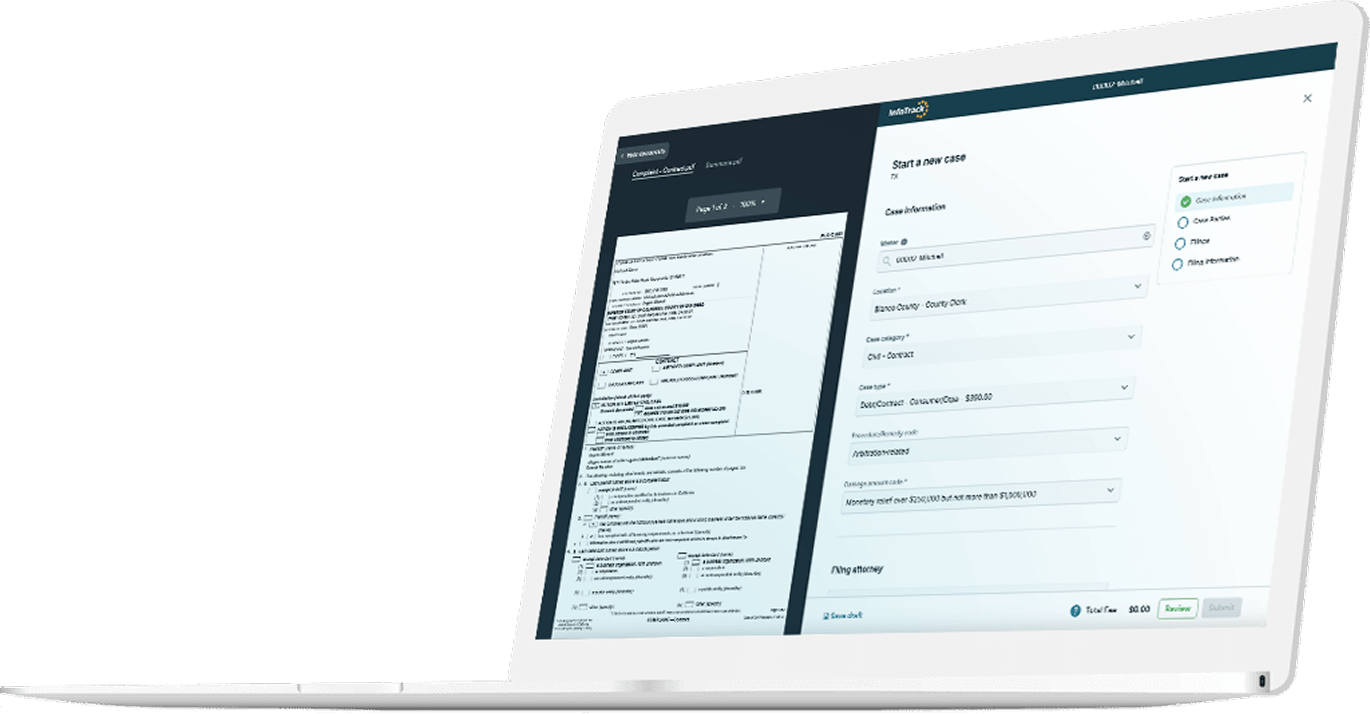
A tool like InfoTrack can also save firms hours and hours of unbillable hours by replacing manual court fee, service cost and client invoice reconciliation with automatic expense capture, centralized records, and consolidated billing, where InfoTrack fronts court fees and service costs and bills them in one monthly bill—another way to simplify firm finances. Create an account now to give InfoTrack a try, or book a personalized demo with a member of our team.