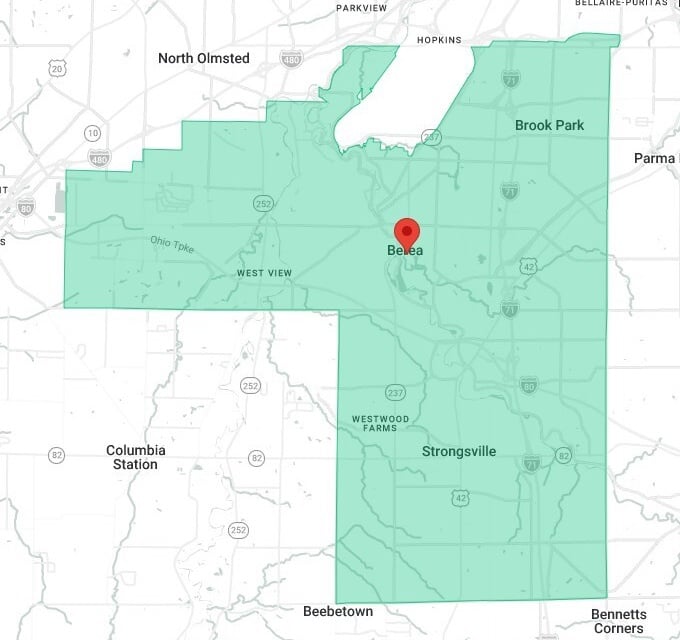
Court Finder checks an address for venue against current court jurisdiction boundaries, mapped from GIS data, not zip code tables. Enter the address and the suit amount, and you get the court, down to which side of the street. It doesn't guess. It doesn't assume.
No subscription. You're invoiced monthly for what you use.
 Map data ©2026 Google
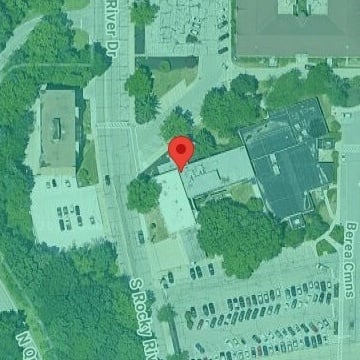
11 Berea Commons, Berea, OH 44017
Suit amount $6,000.00
Zip codes are postal routes. Court jurisdictions are drawn locally, by precinct, township or county, and the two rarely line up. Court Finder maps the court lines themselves, never a zip code table.
Two real lookups · one street · one zip code 78723
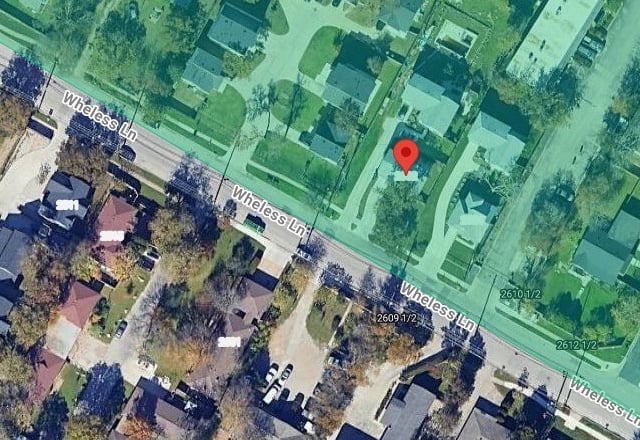 North side
Google · Imagery ©2026 Airbus, Maxar Technologies
North side
Google · Imagery ©2026 Airbus, Maxar Technologies
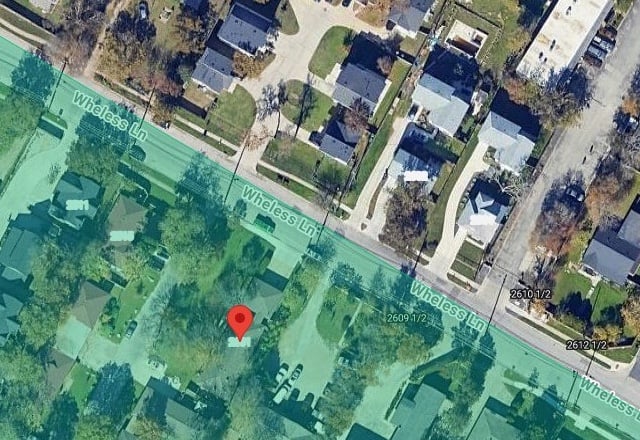 South side
Google · Imagery ©2026 Airbus, Maxar Technologies
South side
Google · Imagery ©2026 Airbus, Maxar Technologies
The address was right. The zip code was right. The line was somewhere else.
In collections, venue follows where the consumer lives, and "judicial district" has been read to mean the smallest venue unit in that court system, often smaller than the county. File on the wrong side of the line and the exposure isn't a transfer motion. It's statutory damages, actual damages and the consumer's attorney's fees.
Type the address and the suit amount. The address is pinned on the map, the court's jurisdiction is shaded around it, and the venue comes back with your court code. You see the result immediately.
Several thousand addresses in a single file, as many files as you need. Upload through Court Finder, or drop the file into your secure SFTP folder and get an email when the results are back in it. Results in hours, not days.
Built in for each client, not left for you to fix after.
A venue chart doesn't go stale because anyone was careless. It goes stale quietly, and nothing tells you it happened.
Keeping court boundaries current takes a network: GIS analysts, court clerks, mapping experts, elections officials and other legal professionals. They tell us when a venue boundary is going to change and what the change will be. Then we acquire the new GIS data, or rebuild the boundary ourselves from its legal description. That work jumps ahead of everything else.
Each address that gets processed carries its own Court Finder ID. So when venue gets questioned months later, by a client auditing your files or by whoever inherits the matter, the determination is still there.
Counties redraw precincts on their own schedule, and legislatures redraw court territory on theirs. A determination that was right in March can look wrong in November, and the date is what tells a redistricting apart from a mistake.
Some states make venue easy. Most don't. The three below are the range, not the roster. We cover all fifty.
District Court and Superior Court, with magistrates hearing small claims, in one unified system across 100 counties. The county line decides. The catch is knowing which county an address is really in, because a mailing city doesn't stop at a county line.
Venue is laid by county or city, and Virginia's independent cities are jurisdictions of their own. Roanoke City and Roanoke County each have their own General District Court, and a Roanoke mailing address can sit in either one.
Ohio's municipal court territory is defined township by township, not county by county. Bellevue reaches across Huron and Sandusky, Vermilion across Erie and Lorain. And the Boston Municipal Court divides the city across eight divisions before reaching past it to pick up Winthrop.
Nationwide means nationwide. Not a state list that ends in "coming soon." When a jurisdiction is mid-redraw we tell you and charge nothing, but we don't leave states off the map.
Venue follows the defendant's address. Which court that address falls inside depends on how the state draws its courts, and no two draw them the same way. Open a state for the courts that hear collection suits there and what decides between them.
Sub-county lines: precincts, townships, wards, divisions. The county won't tell you.
Courts in Court Finder: Justice Court and Superior Court.
What decides venue: Justice courts are organized by precinct, 26 in Maricopa County alone, and a person generally can't be sued outside the justice precinct where they reside. Precinct lines don't track city or zip boundaries.
Courts in Court Finder: City courts, parish courts and District Court.
What decides venue: City courts cover their city plus named police jury wards, so a city court's reach rarely matches the city limits. Parish courts sit in Jefferson and Ascension, and in New Orleans the river decides between the First and Second City Courts.
Courts in Court Finder: Small claims, District Court, Boston Municipal Court and Superior Court.
What decides venue: Each division's territory is a statutory list of cities and towns, and Boston is split among the BMC divisions by ward. The county tells you very little.
Courts in Court Finder: District Court, municipal courts and Circuit Court.
What decides venue: Around a hundred district courts, many drawn around a single city or a handful of townships, especially in Wayne, Oakland and Macomb. Venue turns on which municipality the address is in, and the mailing city often isn't it.
Courts in Court Finder: Justice Court and District Court.
What decides venue: There's one justice court per township, drawn by the county commissioners, and the suit is filed in the defendant's township. Clark County alone has eleven, and township lines don't follow city limits or the "Las Vegas" on the envelope.
Courts in Court Finder: Municipal Courts, County Courts and the Court of Common Pleas.
What decides venue: Roughly 130 municipal courts, each with territory defined by city, village and township, and several reach across county lines. Bellevue takes in parts of Huron and Sandusky, Vermilion parts of Erie and Lorain. County courts cover whatever no municipal court does.
Courts in Court Finder: Magisterial District Courts and the Court of Common Pleas.
What decides venue: About 500 magisterial districts, redrawn after every census, with lines that don't follow zip codes. A suit against an individual goes in a district where the defendant can be served or where the claim arose.
Courts in Court Finder: Justice Courts, County Courts and District Courts.
What decides venue: 796 justice courts sit in precincts that the commissioners court draws inside each county, up to eight per county, and precinct lines don't follow cities or zip codes. A defendant can be sued in the county and precinct where they reside. Harris County alone has sixteen justice courts across eight precincts.
Mostly countywide, with splits, overlaps, or a city that isn't in the county you'd think.
Courts in Court Finder: Small claims, District Court and Circuit Court.
What decides venue: Mostly one court per county. The big exception is Jefferson County, split into the Birmingham and Bessemer divisions by a mapped line that doesn't follow city limits.
Courts in Court Finder: District Court and Superior Court.
What decides venue: No counties. Venue runs by judicial district, and small claims must be filed at the court location nearest where the defendant lives, works or does business.
Courts in Court Finder: Circuit Court.
What decides venue: Circuit courts are county-based, but ten counties have two county seats, each with its own judicial district. In Sebastian County, for instance, Fort Smith and Greenwood are separate venues.
Courts in Court Finder: Superior Court: small claims, limited civil and unlimited civil.
What decides venue: County venue follows where the defendant signed or lives. Inside big counties, local rules assign the courthouse: Los Angeles routes limited collections cases by community and zip code. Court Finder maps those assignments from GIS boundary data, not a zip code table.
Courts in Court Finder: Small claims and Superior Court.
What decides venue: Venue runs by town, grouped into 13 judicial districts rather than counties. Many towns sit where two districts overlap, and small claims follows a separate map of its own.
Courts in Court Finder: Small claims, County Court and Circuit Court.
What decides venue: Venue is set by county, across 67. But large counties split into district and branch courthouses, Miami-Dade and Palm Beach among them, and some assign cases among those courthouses by zip code. Court Finder maps those from GIS boundary data, not a zip code table.
Courts in Court Finder: District Court and Circuit Court.
What decides venue: Four circuits that match the counties, but within each one the suit is filed in the division where the defendant resides, and Oʻahu alone has several.
Courts in Court Finder: Small claims, Cook County's Municipal Department and Circuit Court.
What decides venue: One circuit court per county downstate. Cook County's Municipal Department is split into six districts built from townships with municipal carve-outs, and the suit goes to the district where a defendant resides.
Courts in Court Finder: Circuit Court and Superior Court.
What decides venue: Venue runs by county. Many counties have both a Circuit and a Superior Court, and Lake County's Superior Court sits in four cities: Gary, Hammond, East Chicago and Crown Point.
Courts in Court Finder: District Court and Superior Court.
What decides venue: The District Court works through divisions defined as lists of towns, and several cross county lines or split a county. Bath-Brunswick takes in all of Sagadahoc County plus three Cumberland towns.
Courts in Court Finder: Justice Court, County Court and Circuit Court.
What decides venue: Justice court territory is countywide, but only 24 counties have a County Court at all. Which level hears a mid-size claim depends on the county the address is in.
Courts in Court Finder: Small claims and Circuit Court.
What decides venue: Every county and the City of St. Louis has its own circuit court. That sounds simple until the address says St. Louis or Kansas City: St. Louis City and St. Louis County are separate venues, and Kansas City spreads across four counties.
Courts in Court Finder: District Division and Superior Court.
What decides venue: District divisions are defined by statute as lists of whole towns. The town the address actually sits in decides, not the mailing town.
Courts in Court Finder: New York City Civil Court, City Courts, County Courts and Supreme Court.
What decides venue: Inside New York City, venue follows the borough. Outside it, the 61 City Courts each serve their own city, County Courts take the rest, and none of it follows zip codes.
Courts in Court Finder: Small claims, District Court and Superior Court.
What decides venue: The District Court's four divisions are drawn by city and town, not by county. Cranston and North Kingstown, for instance, file in the Third Division alongside Kent County.
Courts in Court Finder: Magistrates Court and Circuit Court.
What decides venue: Magistrate jurisdiction is countywide, and a suit may be filed in any magistrate court in the defendant's county. But counties run several magistrate offices and route cases among them locally, so the right office still depends on the address.
Courts in Court Finder: Small claims, General District Court and Circuit Court.
What decides venue: Venue is laid by county or city, and Virginia's independent cities are separate jurisdictions from the counties around them. Roanoke City and Roanoke County each have their own General District Court, and a Roanoke mailing address can sit in either.
Courts in Court Finder: Small claims, District Court and Superior Court.
What decides venue: A county can be one district or several. King County District Court has five electoral districts, and Snohomish's four divisions each take suits from defendants who live in them. Assignees can't use small claims.
One court per level per county, and the county line decides.
Courts in Court Finder: County Court and District Court.
What decides venue: One County Court per county, Denver and Broomfield included, and no sub-county units.
Courts in Court Finder: Justice of the Peace Court, Court of Common Pleas and Superior Court.
What decides venue: Three counties, one civil court location per level in each.
Courts in Court Finder: Superior Court: the Small Claims and Conciliation Branch and the Civil Actions Branch.
What decides venue: One court and one courthouse for the whole District.
Courts in Court Finder: Magistrate Court, State Court and Superior Court.
What decides venue: Every court is countywide across 159 counties, and venue follows the defendant's county. What varies is which courts a county has: about 73 have a State Court.
Courts in Court Finder: Small claims, the Magistrate Division and District Court.
What decides venue: One court in each of the 44 counties. Attorneys can't appear in small claims, so collection firms file on the magistrate division's regular civil docket.
Courts in Court Finder: Small claims and District Court.
What decides venue: One court per county across 99 counties. The one exception is Lee County, split between Fort Madison and Keokuk along the historic Sullivan Line.
Courts in Court Finder: District Court.
What decides venue: One district court per county, 105 of them. Assigned claims are excluded from small claims, so collection suits go on the limited actions docket.
Courts in Court Finder: Small claims, District Court and Circuit Court.
What decides venue: A District Court in all 120 counties. Judicial districts can span several counties, but venue still follows the county.
Courts in Court Finder: Small claims, District Court and Circuit Court.
What decides venue: The District Court sits in every county and Baltimore City, one circuit court per county, and the county line decides venue.
Courts in Court Finder: Conciliation Court and District Court.
What decides venue: One court per county across 87 counties. The county where the defendant lives generally decides.
Courts in Court Finder: Justice Court and District Court.
What decides venue: Justice courts serve the whole county. City and municipal courts don't take private debt cases.
Courts in Court Finder: Small claims, County Court and District Court.
What decides venue: One County Court per county, and the county decides. Assigned claims can't be filed in small claims, so collection suits go on the County Court's regular civil docket.
Courts in Court Finder: Small claims, the Special Civil Part and Superior Court.
What decides venue: Venue lies in the county where a defendant resides, across 21 counties.
Courts in Court Finder: Magistrate Court, the Bernalillo County Metropolitan Court and District Court.
What decides venue: One magistrate district per county, with the Metro Court serving Bernalillo County. The county line decides.
Courts in Court Finder: Small claims, District Court and Superior Court.
What decides venue: One unified system across 100 counties. Small claims requires the defendant to live in the county where the magistrate sits.
Courts in Court Finder: District Court.
What decides venue: County-based across 53 counties. In small claims, a claim on an open credit account goes in the county where the defendant lives or does business.
Courts in Court Finder: District Court.
What decides venue: One per county across 77 counties. Collection agencies and assignees can't use the small claims procedure, so their suits go on the regular civil docket.
Courts in Court Finder: Circuit Court.
What decides venue: One Circuit Court in each of the 36 counties, and the county line decides.
Courts in Court Finder: Magistrate Court and Circuit Court.
What decides venue: One unified system across 66 counties. Small claims venue is the county where the defendant lives or the claim arose.
Courts in Court Finder: General Sessions Court and Circuit Court.
What decides venue: One General Sessions Court in each of the 95 counties. Big counties like Shelby and Davidson run several divisions of that one court.
Courts in Court Finder: District Court.
What decides venue: County-based. Assignees can't use small claims in Utah, so collection suits go to District Court in the defendant's county.
Courts in Court Finder: Superior Court.
What decides venue: One Superior Court unit in each of the 14 counties. Consumer credit and medical debt collections over $5,000 fall outside small claims.
Courts in Court Finder: Magistrate Court and Circuit Court.
What decides venue: Magistrate court sits in every one of the 55 counties, from two magistrates up to thirteen in Kanawha, and venue follows the county.
Courts in Court Finder: Small claims and Circuit Court.
What decides venue: County-based across 72 counties. For consumer credit claims the county is set by the Wisconsin Consumer Act, and a suit filed in the wrong county must be dismissed unless the defendant waives.
Courts in Court Finder: Circuit Court and District Court.
What decides venue: A circuit court in each of the 23 counties. The county line decides.
A summary of the courts Court Finder covers in each state and how their lines are drawn, current as of October 2026, for orientation. It is not legal advice, and it doesn't replace the venue rules for your matter.
No subscription, no seat license, no annual minimum. You're invoiced at the end of the month for the searches that came back with a venue result.
Running thousands a month, or already serving process through InfoTrack?
High-volume firms get special pricing. And if InfoTrack already handles your service of process, venue checks can be bundled in. In some states they're included.
Standard pricing
A search that returns a venue.
Bad addresses and PO boxes cost nothing.
Invoiced monthly on usage.
We don't guess, and we don't bill for guesses.
Every venue looked up by hand costs your team time. Every one that's wrong costs a transfer, a refiling, or an FDCPA suit against your firm. Court Finder answers in seconds for one address, and in hours for a whole file.
Tell us a little about your firm and the Court Finder team will be in touch.
Nothing to install. No subscription, no minimum.
Already a Court Finder customer? Sign in
Court Finder returns the court with venue over an address, based on current boundary data. It is not legal advice and does not replace your own venue determination.
Partnerships
Support

©2026 All Rights Reserved | General terms - Privacy policy - Accessibility statement